
№ 0023 minTal Weiss
Software engineering finally exists
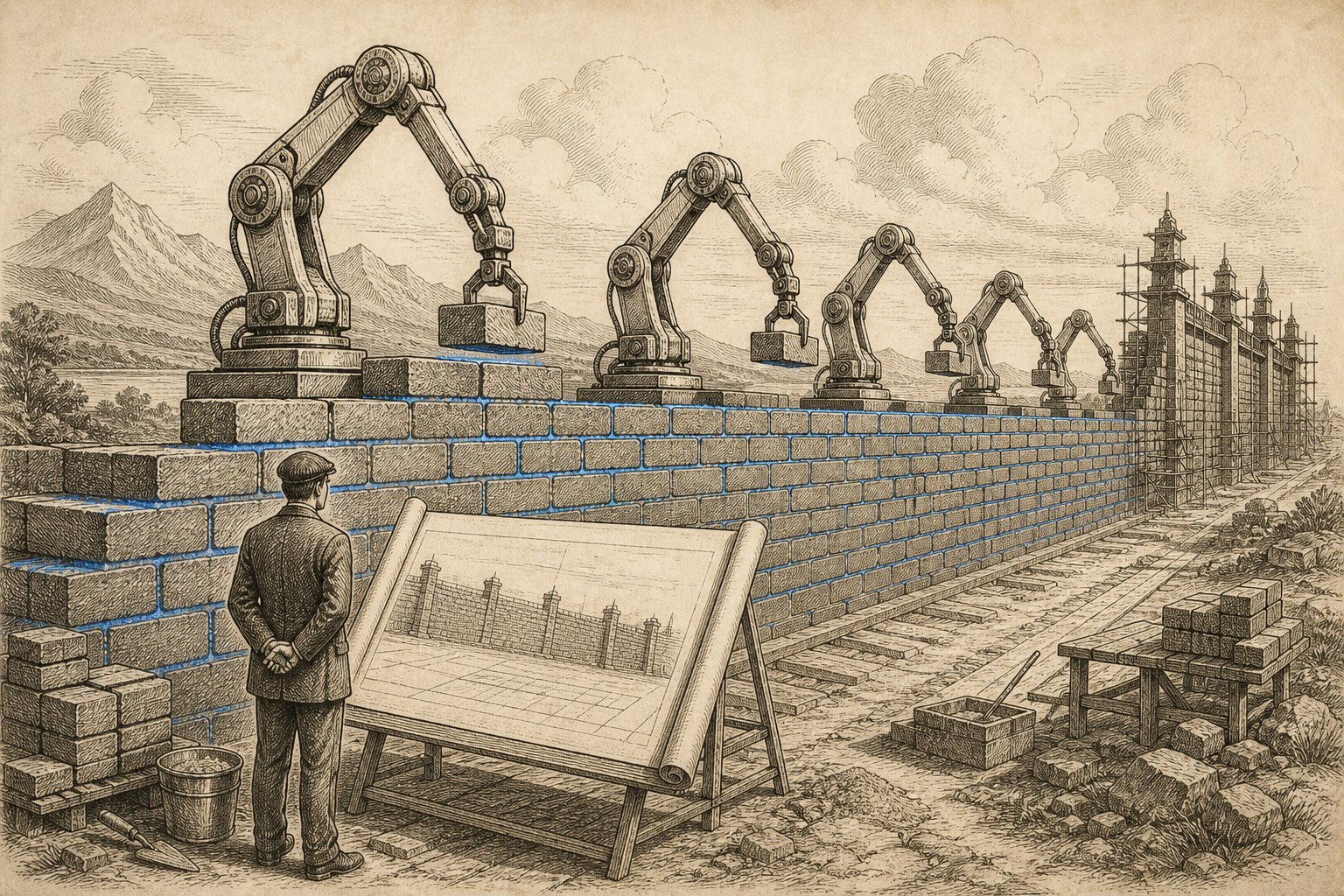
Civil engineers do not lay bricks. For seventy years programmers did. Now a machine lays them well, and the job the title promised finally exists.
I mean no disrespect to coders. I've coded plenty myself, and I found it genuinely taxing and difficult. But I no longer think that thing was engineering.
Consider the civil engineer, or the architect. Do they lay each brick in the building? Is their work thinking about every physical detail and then placing each one by hand? Not really. That is the construction worker's job: to implement. "I'm a senior construction engineer lead." Awesome, what do you do? "I follow a plan someone gave me and I execute it exactly."
That always sounded to me like a job description for a machine. And as of very recently, a machine does it really well.

The strange part
People who are really talented, who worked very hard for years to become master coders: most of what they mastered no longer matters. That is a rude thing to say, and I'm fairly confident it is true, mostly because I watch it happen from the inside. I out-ship people with far more experience than me, and not just on speed. On reliability and bug count too.
The concrete version: I run this company alone, with agents. Two repos, about 190,000 lines of TypeScript, and agents wrote most of it. A few years ago that sentence described a disaster in progress. Today the interesting problems are things like making the architecture impossible to misunderstand, not the typing.
I'll admit I am biased
I was always far more interested in the engineering part of software engineering. Read Designing Data-Intensive Applications and tell me the deep part of this field is remembering which syntax React chose for an API call.
Writing code by hand is rewarding, even beautiful, the way any craft is. It is also unbelievably tedious. And I want to be fair to the craft: the best coders are craftsmen. It takes abstract thinking, you have to be smart, and those craftsmen built the most powerful companies in the world.
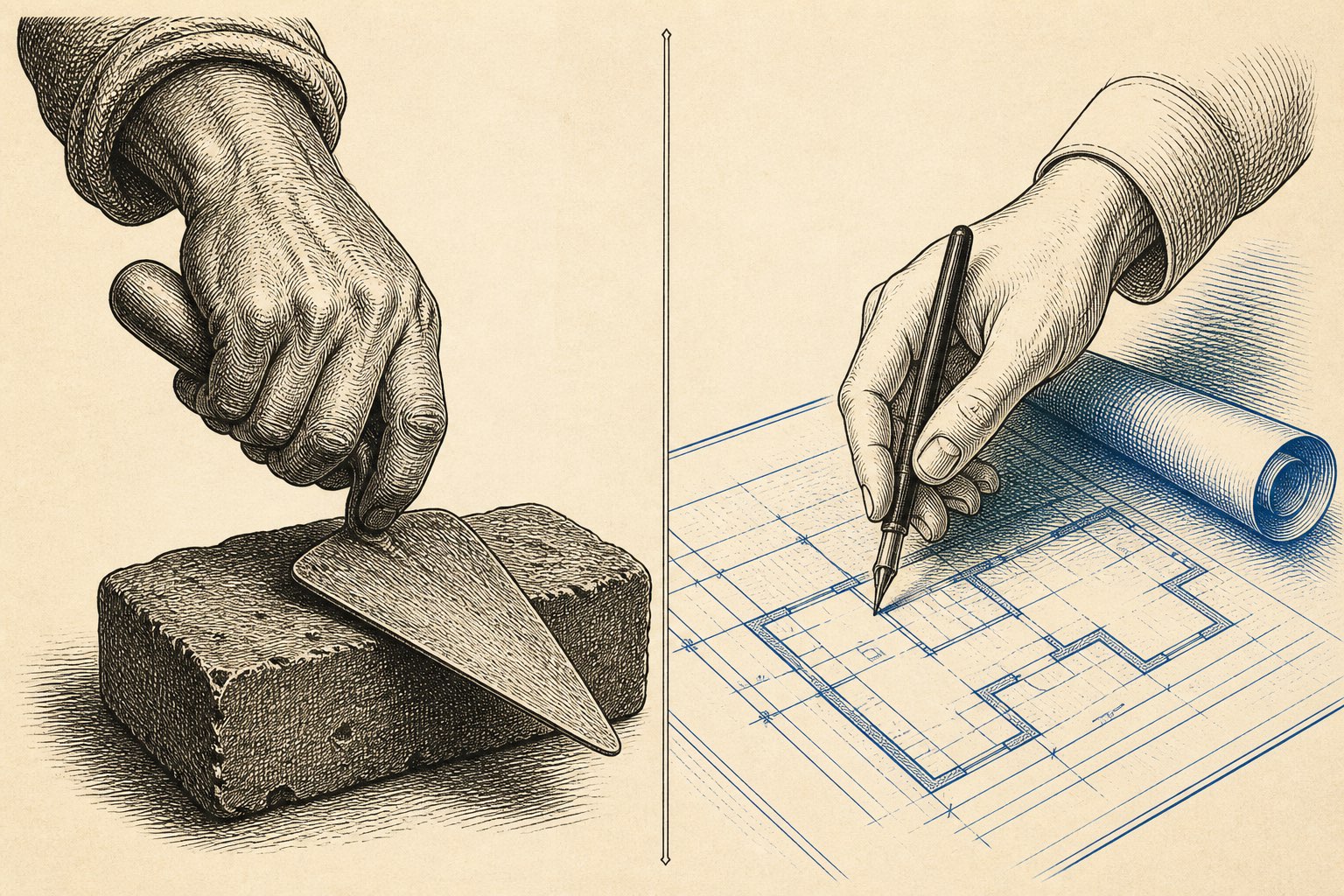
But there is a reason the degree was always notoriously worthless for the day job. A civil engineering degree does not make you lay bricks better. A computer science degree does not make you glue framework syntax better. It was never supposed to. The degree taught engineering, and then the industry handed you a trowel.
What the job is now
When a machine lays the bricks, what remains is exactly what the title promised all along:
- Deciding what to build, and what not to build.
- The data model. The boundaries. Where state lives and what owns it.
- The invariants: what must never happen, and machinery that makes it impossible rather than discouraged.
- What "verified" means, and making it deterministic instead of vibes.
- Keeping comprehension of a system you did not type.
None of that is typing. All of it is engineering. And you get to do it all day now, because the typing takes minutes.
The best of times
I find it frankly insane how quickly the world switched. Maybe demand for software is finite, and nobody will want more of it than we already have. I doubt it. I create more software than I ever have, and I'm having more fun building bigger things, faster, than at any point in my life.
Software engineering exists now, for the first time in history. This is the best of times.
ShapelessAI is an agentic social media team: it researches your market, then writes, designs, and publishes posts and short video to nine platforms. shapelessai.com